
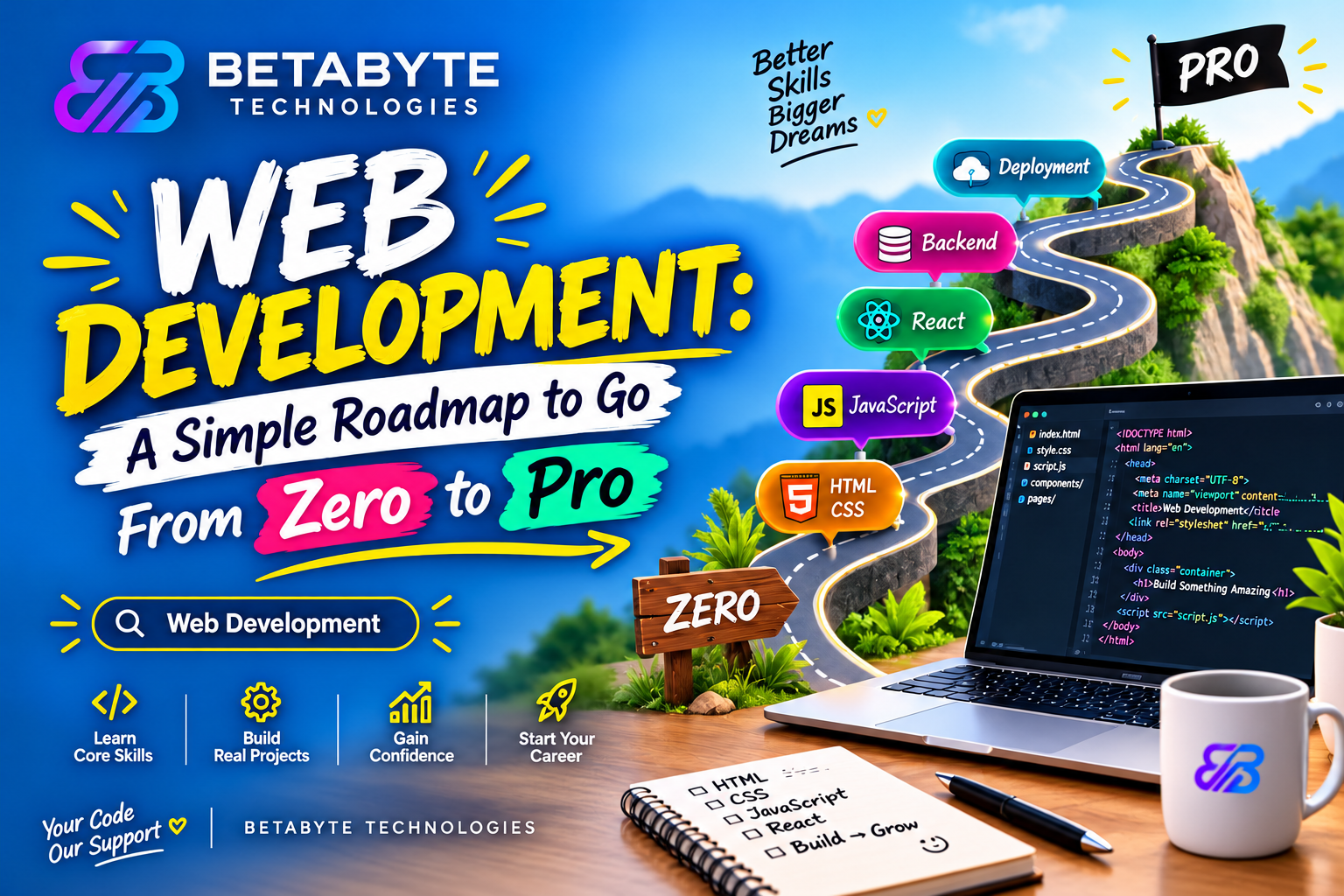
Whether you are aiming for a tech career or you own a business and want a website that attracts real customers, knowing where to begin is hard. With so many languages and frameworks around, newcomers often end up overwhelmed.
This guide lays out a practical path from absolute beginner to confident developer, and points out when it is smarter to bring in experts. Beta Bytes Technologies, Mohali delivers professional web development alongside SEO, social media marketing, Google Ads and Meta Ads, helping brands get results without having to learn everything themselves.
What Is Web Development?
Web development is the work of designing, building and maintaining websites and web apps. It breaks down into three areas:
- Front-end development: everything visitors see and interact with, such as page layouts, buttons and animations.
- Back-end development: the server-side code, databases and business logic running behind the scenes.
- Full-stack development: working across both the front end and the back end.
If you are too busy to learn programming, many business owners prefer to hire web development services so that specialists can design, launch and look after the site on their behalf.
The Step-by-Step Roadmap
Work through the steps below in sequence. Rushing past the fundamentals is the mistake beginners make most often.
- Start with HTML. It gives every page its skeleton: titles, pictures, hyperlinks and input forms.
- Move on to CSS, which controls colors, typography and page layout. Make sure you understand responsive design, Flexbox and Grid.
- Next comes JavaScript, which makes pages interactive. Spend your time on variables, functions, loops and DOM handling.
- Learn Git along with GitHub. Tracking code changes is a must-have skill for every developer and makes team collaboration possible.
- Select a front-end framework; most beginners go with React thanks to its wide adoption.
- Study a server-side language. Node.js (JavaScript), Python and PHP are all reliable choices.
- Get to grips with databases. Begin with SQL options such as MySQL or PostgreSQL, then look at MongoDB.
- Build real projects and publish them. Platforms such as Netlify, Vercel and GitHub Pages let you put your work online.
How Long Does Each Stage Take?
Your pace is determined by the weekly hours you can devote to practice. The chart below gives rough timelines for each stage, assuming you study 10 to 15 hours a week.

The chart shows that JavaScript, React and server-side programming demand the most time, so give them extra patience. In total, expect the full journey to stretch to about eight to ten months if you stay consistent.
Key Web Development Tools at Each Stage
| Stage | Skills to Learn | Common Tools |
|---|---|---|
| Beginner | HTML, CSS | VS Code, Chrome DevTools |
| Intermediate | JavaScript, Git | GitHub, npm |
| Advanced front end | React, Tailwind CSS | Vite, Figma |
| Server side | Node.js, APIs | Express, Postman |
| Data storage | SQL, NoSQL | MySQL, MongoDB |
| Going live | Hosting, domains | Netlify, Vercel |
Would you rather skip the learning curve? Beta Bytes Technologies, Mohali builds professional websites and runs digital marketing campaigns, so you can go live fast with a search-friendly site instead of spending months on every tool.
Smart Ways to Learn Web Development Faster
- Start building early. Small projects like a personal portfolio, a task list and a weather widget teach you far more than hours of watching tutorials.
- Practice daily, even if it is only 30 minutes.
- Get used to reading official documentation; MDN Web Docs is an excellent free resource.
- Get involved in developer communities such as Stack Overflow, GitHub and Discord servers.
- Resist the urge to jump on every new framework. Get the fundamentals right first.
- Recognize when to ask for help. Business owners can hire web development services and spend their time growing the company while experts take care of the website.
- Once you are confident, start contributing to open-source projects.
Conclusion
Becoming a skilled web developer is not a race. What matters is following a clear plan: learn the fundamentals, create real projects and keep getting better. Begin with HTML today, practice a little every day, and within a year you may be creating full websites. There is no better moment to start than now. If you would prefer experts to handle it, the team at Beta Bytes Technologies, Mohali can take your idea from concept to launch.
Frequently Asked Questions
1. Is learning web development tough for a beginner?
It can seem tough at the start, but taking it one step at a time makes it manageable. Staying consistent counts for more than natural talent.
2. What should I learn first when starting web development?
Begin with HTML and CSS and then progress to JavaScript, since they form the base of every website.
3. Can someone become a web developer with no degree?
Yes. Plenty of employers look at what you can do and the work you have built. Solid projects and a well-kept GitHub profile can help you get hired.
4. Does web development still offer a good career in 2026?
Yes. Organizations of every scale rely on web apps and websites, which keeps demand steady for freelancers, startups and large employers.
5. How do front-end and back-end development differ?
The front end covers everything a visitor sees and clicks on. The back end deals with servers, databases and security in the background.
6. What salary can a web developer expect?
Pay depends on location, experience and the employer. Beginners tend to start on modest salaries, which rise fast as skills and specialization grow.
7. Should I hire a company instead of learning web development myself?
Absolutely. Businesses that want a professional, fast and search-friendly site without learning to code can rely on Beta Bytes Technologies, Mohali for end-to-end web development.
More Than Websites: What Beta Bytes Technologies, Mohali Offers
Here is how Beta Bytes Technologies, Mohali supports businesses that want to grow their online presence:
- Web Development Services: building responsive, fast and easy-to-use websites tailored to your business.
- Search Engine Optimization (SEO): boosting your site's search rankings and bringing in more organic visitors.
- Google Ads: creating high-intent search campaigns that deliver qualified leads.
- Meta Ads: connecting with the audience that matters on Facebook and Instagram.
- Social Media Marketing: strengthening your brand presence and audience engagement on every platform.
Leave a Reply
Have questions or feedback? Post your comment below.